

A home warranty for a luxury property is a service contract that covers the repair or replacement of major home systems and appliances when they break down from normal wear and tear. It is not homeowners insurance. Understanding what a home warranty luxury property plan actually covers, and where it falls short, is the difference between real financial protection and a false sense of security on a million-dollar investment.
Kamilashayehomes works with luxury buyers across Prosper, Frisco, and Celina every day. The question of home warranty coverage comes up in nearly every transaction involving a high-end resale property. The answer is rarely simple, and the stakes are high.
What is a home warranty for a luxury property?
A home warranty is a service contract, not insurance, that pays for repairs or replacements when covered systems and appliances fail from everyday use. Homeowners insurance covers sudden, unexpected events like fire or storm damage. A home warranty covers the slow, inevitable breakdown of mechanical systems from regular use.
The distinction matters enormously for luxury homeowners. A $15,000 Sub-Zero refrigerator that stops cooling is not a covered insurance event. It is exactly the kind of mechanical failure a home warranty exists to address. Without a warranty, that repair bill lands entirely on the owner.

Structural damage falls under homeowners insurance, while home warranties fill the gap for system and appliance breakdowns from regular use. Think of the two products as complementary halves of a complete protection strategy. Neither one replaces the other.
What does a luxury home warranty cover and exclude?
Luxury home warranty plans typically cover the core mechanical systems found in any home, but the best plans extend coverage to match the higher-end equipment common in premium properties.
Standard covered systems and appliances include:
- Central HVAC systems, including multi-zone climate control
- Electrical panels and wiring
- Plumbing systems and water heaters
- Built-in kitchen appliances such as ovens, dishwashers, and refrigerators
- Garage door openers and ceiling fans
Premium plans can cover luxury brands and carry higher per-item limits, sometimes reaching several thousand dollars per appliance. That higher cap is the primary differentiator between a standard plan and one designed for a high-end home.
Exclusions are where luxury homeowners get surprised. Warranties exclude cosmetic and installation-related damages even when the core system failure is covered. A cracked stone countertop around a built-in cooktop is not covered. Custom cabinetry damaged during a repair visit is not covered. Smart home automation systems, wine cellars, and outdoor kitchens are frequently excluded unless specifically added to the contract.
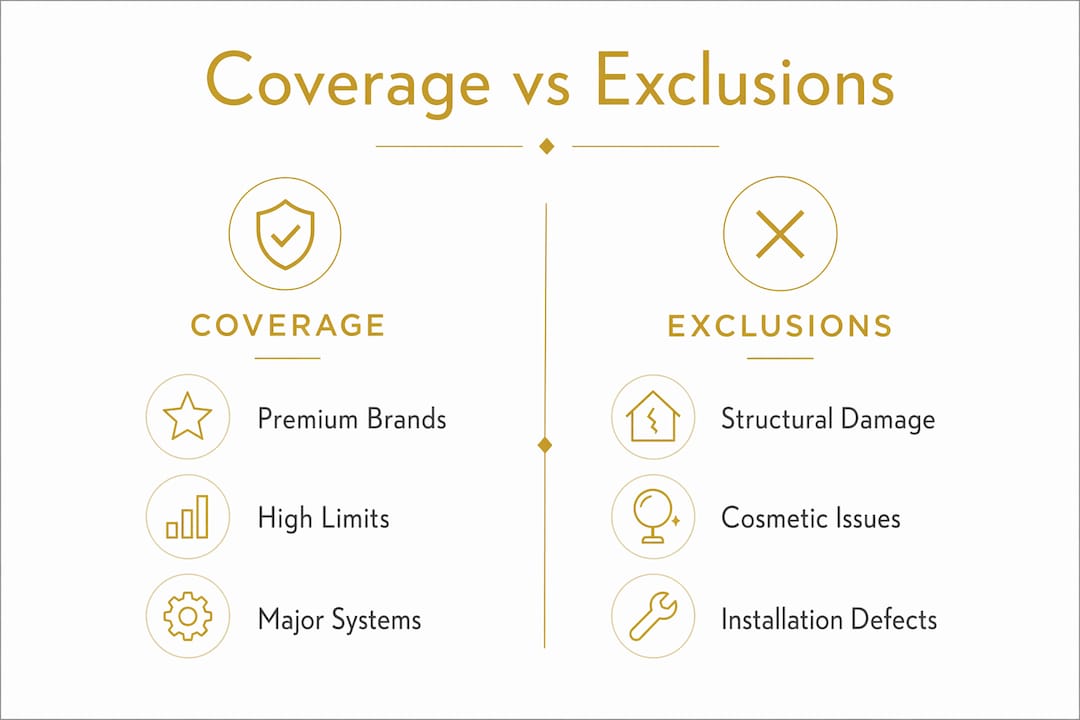
Structural components are not covered by any home warranty plan. Foundation issues, roof structures, and custom millwork fall outside the scope of every standard contract. Luxury buyers with extensive custom builds need to understand this boundary clearly before signing.
Pro Tip: Ask the warranty provider to list every appliance brand and model in your home and confirm in writing whether each one is covered before you purchase the plan.
How do coverage caps affect luxury homeowners?
Coverage limits are the most consequential fine print in any luxury home protection plan. A standard home warranty might cap HVAC replacement at $1,500. Replacing a multi-zone system in a 6,000-square-foot home can cost $10,000 or more. The gap between the cap and the actual cost falls on the homeowner.
Policies have limits, and providers may deny claims for items that exceed those caps or fall outside covered categories. That denial is not a breach of contract. It is the contract working exactly as written.
Three scenarios where coverage caps create real financial exposure:
- HVAC replacement in a large home. Multi-zone systems serving 5,000-plus square feet routinely cost far more than standard warranty caps allow.
- Luxury appliance replacement. A Wolf range or Miele dishwasher may cost three to five times what a standard plan reimburses for appliance replacement.
- Plumbing in custom homes. Specialty fixtures and non-standard pipe configurations can push repair costs well above covered amounts.
“The biggest risk with home warranties is misunderstanding coverage limitations. Buyers must read contracts thoroughly to know exactly what is and is not covered before a claim arises.” — Consumer Reports
Reviewing per-item caps, annual payout maximums, and the list of covered brands before purchasing is not optional. It is the only way to know whether a plan actually protects a luxury property or simply creates the appearance of protection.
How to time and select a luxury home warranty
Timing a home warranty purchase correctly saves money and avoids redundant coverage. New construction is typically protected under builder and manufacturer warranties, which means buying a third-party home warranty in year one of a new build is often unnecessary. The right time to add a home warranty is when those initial warranties begin to expire and major systems start aging.
For buyers of new construction in communities like Light Farms, understanding the builder warranty timeline is the first step in planning long-term coverage. Builder structural warranties often run 10 years, while appliance and systems coverage may expire in year one or two. That gap between early expiration and the end of the structural warranty is where a home warranty adds the most value.
Key selection criteria for a luxury home warranty:
- Confirm coverage for every specific brand and model in the home, not just generic appliance categories
- Review per-item caps and annual payout maximums against actual replacement costs for your equipment
- Check the service fee per claim, which typically runs $75–$150, and budget accordingly
- Verify that the plan uses certified technicians qualified to service luxury and proprietary equipment
- Read the exclusions list for cosmetic, installation, and smart home technology limitations
Luxury appliances often require certified technician servicing and use proprietary parts that not all warranty networks can source. A plan that sends a general handyman to service a Thermador range is not a luxury plan, regardless of what the marketing materials say.
Pro Tip: Request a sample contract before purchasing any plan. Compare the exclusions list against every major system and appliance in your home. If a provider will not share the full contract upfront, that is a clear signal to look elsewhere.
What are the benefits and drawbacks of a luxury home warranty?
A luxury home protection plan delivers real financial value when the covered systems are the right ones and the caps match actual replacement costs. The benefits are concrete.
| Benefit | Drawback |
|---|---|
| Predictable repair costs via service fees | Coverage caps may fall short of luxury replacement costs |
| Single point of contact for repair coordination | Approved technicians may lack luxury appliance expertise |
| Protection against high-cost mechanical failures | Cosmetic and installation damage is excluded |
| Can increase resale appeal for buyers | Annual premiums add to ownership costs |
| Covers multiple systems under one contract | Claims can be denied for items outside covered categories |
The resale angle is worth noting. Offering a home warranty as part of a luxury listing signals to buyers that the property is well-maintained and that the seller stands behind the home’s systems. That perception has real value in a competitive market.
The drawback that catches most luxury owners off guard is the false security problem. A plan that covers standard appliances but caps HVAC replacement at $1,500 does not protect a luxury home. It protects a starter home. Buying the wrong plan is not neutral. It costs the annual premium and still leaves the owner exposed.
Pro Tip: Compare the annual premium plus service fees against the actual repair history of your home’s major systems. If your systems are newer and under manufacturer warranty, a home warranty may not yet be the right investment.
What luxury buyers should know before signing a warranty contract
Reading the full contract before signing is the single most important step in the home warranty process. Misunderstanding coverage limitations is the primary reason claims get denied. The contract defines everything, and the marketing summary defines nothing.
Before committing to any luxury real estate warranty, verify these points:
- Confirm that every appliance brand and model in the home appears on the covered list, not just the category
- Identify all exclusions related to cosmetic damage, pre-existing conditions, and installation defects
- Understand the claims process: who to call, how long repairs take, and what happens if a covered item cannot be repaired
- Check whether the plan overlaps with any existing manufacturer or builder warranties to avoid paying twice
- Clarify what happens when a covered item exceeds the reimbursement cap, specifically whether you receive cash or a replacement
Buyers evaluating luxury homes in Prosper, Texas should treat the home warranty review as part of the due diligence process, not an afterthought. The contract terms are as important as the inspection report.
Key Takeaways
A luxury home warranty is only as valuable as the coverage caps, brand inclusions, and exclusion clauses written into the contract.
| Point | Details |
|---|---|
| Home warranty vs. insurance | A home warranty covers wear and tear breakdowns; homeowners insurance covers sudden damage events. |
| Coverage caps matter most | Per-item reimbursement limits often fall short of actual luxury appliance replacement costs. |
| Timing the purchase | Buy after builder and manufacturer warranties expire to avoid redundant and wasted coverage. |
| Read every exclusion | Cosmetic, installation, and smart home damages are commonly excluded even in premium plans. |
| Verify brand coverage | Confirm each specific appliance brand and model is listed as covered before signing any contract. |
What I have learned about luxury home warranties in North Dallas
The luxury home warranty conversation is one I have had with buyers at every price point, and the pattern is consistent. Buyers assume a premium-priced plan means premium coverage. It often does not.
The most common mistake I see is buyers purchasing a warranty based on the annual premium alone. A lower premium almost always means lower caps or narrower brand coverage. For a home with a Wolf range, a Miele dishwasher, and a multi-zone Carrier HVAC system, a plan with $1,500 appliance caps is not a luxury plan. It is a standard plan with a luxury price tag.
The second mistake is buying a warranty on a brand-new construction home before the builder warranty expires. The coverage overlaps, and the buyer pays twice for the same protection. The right move is to calendar the expiration dates of every manufacturer and builder warranty, then purchase a home warranty to pick up where those leave so there is no gap and no overlap.
What actually works is treating the warranty contract like a real estate contract. Read it line by line. Negotiate the terms if the provider allows it. And if a provider will not disclose the full contract before purchase, walk away. Transparency is the baseline for any product protecting a seven-figure investment.
— Felix
Protecting your luxury investment with Kamilashayehomes
Kamilashayehomes specializes in luxury real estate across Prosper, Frisco, Celina, and surrounding North Dallas communities. Every transaction includes guidance on contract terms, builder warranties, and the protection strategies that matter most for high-end properties. Whether you are evaluating a resale home or a new build, understanding your warranty coverage is part of making a confident purchase decision. Browse featured luxury properties to see current listings across North Dallas, or get a home valuation to understand your property’s current market position and investment value.
FAQ
What is a home warranty for a luxury property?
A home warranty for a luxury property is a service contract that covers repair or replacement of major home systems and appliances when they fail from normal wear and tear. It is not homeowners insurance and does not cover structural damage or sudden events.
Does a home warranty cover luxury appliances like Sub-Zero or Wolf?
Standard home warranty plans often exclude or cap coverage for premium appliance brands. Premium luxury plans may cover specific brands, but buyers must confirm each brand and model is listed in the contract before purchasing.
When should a luxury homeowner buy a home warranty?
The best time to purchase a home warranty is after builder and manufacturer warranties expire. Buying earlier creates redundant coverage and unnecessary cost.
What does a home warranty not cover in a luxury home?
Home warranties exclude structural components, cosmetic damage, installation defects, and most smart home technology. Custom luxury features like wine cellars and outdoor kitchens are also typically excluded unless specifically added to the plan.
How much does a home warranty service fee cost?
Service fees per claim typically run $75–$150 regardless of the repair cost. Luxury homeowners should budget for these fees separately from the annual premium when evaluating total warranty costs.
Recommended
- Types of Luxury Homes in Southlake, TX: 2026 Buyer Guide
- Buying New Construction in Light Farms – What You Need to Know – Kamila Shaye Homes & Estates of Prosper Frisco & Celina
- Buy a Luxury Home in Prosper, Texas: 2026 Guide
- 5 Things to Check Before You Buy a Home in Light Farms – Kamila Shaye Homes & Estates of Prosper Frisco & Celina