

Negotiating a home price in North Dallas is a skill built on preparation, local data, and understanding what the seller actually needs. The Dallas-Fort Worth market in 2026 is not uniform. Prosper, Celina, Frisco, and surrounding communities each carry distinct supply and demand dynamics that directly affect your leverage at the table. Whether you are buying your first home or relocating from out of state, knowing how to structure an offer around comparable sales, seller concessions, and flexible terms separates accepted contracts from rejected ones. This guide gives you the specific tools to negotiate effectively in this market.
What market factors affect your negotiation power in North Dallas?
North Dallas is not a monolithic market. Different neighborhoods and price segments carry unique negotiation dynamics, which means a strategy that works in Frisco may fall flat in Prosper or Celina. Understanding these local differences is the first step toward building real leverage.
Several factors shift the balance of power between buyer and seller:
- Days on market. Homes with longer market times or recent price reductions signal a motivated seller who is more open to adjustments. Any listing sitting above the neighborhood average for days on market is worth a closer look.
- Inventory levels. When supply rises in a specific submarket, buyers gain leverage. Tracking active listings in communities like Star Trail or Southlake tells you whether you are competing against other buyers or negotiating from a position of strength.
- Seller motivation. A seller relocating for work, already under contract on a new home, or carrying two mortgages has a real financial reason to negotiate. These circumstances are not always advertised, but an experienced local agent can often surface them before you submit an offer.
- Price segment. Luxury properties above $800,000 in North Dallas tend to sit longer and carry more negotiating room than entry-level homes, which still move quickly in high-demand school districts.
Pro Tip: Ask your agent to pull the list-to-sale price ratio for the specific zip code you are targeting. A ratio below 98% tells you sellers in that area are regularly accepting offers below list price.
How to use comparable sales to set your initial offer

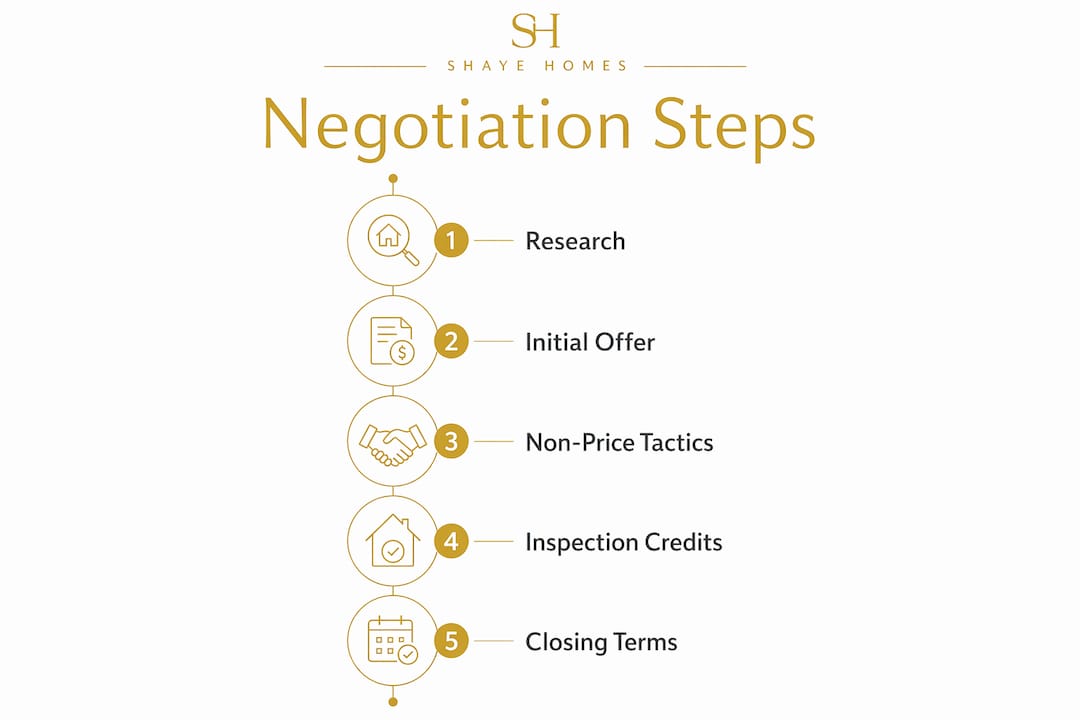
Anchoring your offer in objective market data is the single most effective home price negotiation strategy available to buyers. Offers tied to comparable sales from the last three to six months produce better seller responses than arbitrary percentage discounts off list price. A seller who sees a number grounded in real data has to defend their price with data. A seller who sees a random low number simply says no.
Here is how to build a data-driven offer in four steps:
- Pull recent comparable sales. Focus on closed sales within a half-mile radius over the past three to six months. Match square footage, lot size, age, and condition as closely as possible. A home valuation tool can give you a starting benchmark before your agent refines it.
- Identify active and pending listings. Active listings show you current competition. Pending contracts tell you where the market is heading right now, not three months ago.
- Build a written offer rationale. Attach a brief comparative market analysis to your offer. This document shows the seller exactly which sales support your number. It converts your offer from an opinion into a fact-based argument.
- Factor in condition. If the home needs a new roof, updated HVAC, or cosmetic work, adjust your comparable sales baseline downward. Document those adjustments in writing so the seller understands the logic.
The table below shows how offer positioning shifts based on market conditions in North Dallas submarkets:
| Market condition | Buyer leverage | Recommended offer range |
|---|---|---|
| High inventory, long days on market | Strong | 3% to 6% below list with written CMA |
| Balanced market, average days on market | Moderate | 1% to 3% below list with comps attached |
| Low inventory, fast-moving listings | Weak | At or above list, focus on terms |
| Recent price reduction on listing | Strong | Offer at or below reduced price with data |
Pro Tip: A pre-approval letter that withholds your maximum budget preserves negotiation room. Earnest money deposits of 1% to 3% of the purchase price signal serious intent without overcommitting your cash position.
What non-price tactics can strengthen your offer?
The most sophisticated buyers in 2026 negotiate mortgage rate buydowns and closing cost credits rather than focusing exclusively on price cuts. This approach optimizes both monthly payments and upfront affordability, and it often aligns better with what sellers actually need.
Seller concessions including closing cost credits can reach up to 6% of the purchase price. On a $400,000 home, a 3% seller credit equals $12,000 saved at closing. That is a meaningful number, and many sellers find it easier to agree to a credit than to reduce their sale price, which affects their net sheet and their ego.
Here are the most effective non-price negotiation tools available to North Dallas buyers:
- Closing cost credits. Closing costs run 2% to 5% of the purchase price. When cash at closing is tight, negotiating a credit is often more valuable than a price reduction because it directly reduces your out-of-pocket expense without changing the loan amount.
- Mortgage rate buydowns. Ask the seller to contribute toward a temporary or permanent rate buydown. On a $450,000 loan, even a 0.5% rate reduction saves hundreds of dollars per month. This is a 2026 Dallas buyer tactic that many buyers overlook entirely.
- Flexible closing dates. Sellers who need time to move often favor buyers offering rent-back agreements or extended closings over slightly higher competing offers. Matching your timeline to the seller’s needs costs you nothing and can win the deal.
- Inspection-based credits. Documented repair needs covering roofs, HVAC systems, electrical panels, or plumbing give you legitimate grounds to request a price reduction or closing credit after the inspection period. Always get contractor estimates in writing before submitting your repair request.
Pro Tip: Frame your repair request as a credit rather than a demand for the seller to fix items. Sellers control the quality of repairs they make. A credit lets you hire your own contractor.
What mistakes do buyers make when negotiating in North Dallas?
Knowing what not to do is as valuable as knowing the right moves. These are the four most common errors buyers make when trying to negotiate home prices in North Dallas, and how to avoid each one.
- Submitting a lowball offer without justification. Sellers reject below-asking offers that lack a comparative market analysis or documented repair list. A low number without context reads as disrespect, not strategy. Always attach your reasoning in writing.
- Anchoring to list price instead of market value. List price is a marketing number, not a market value. A home priced 8% above recent comparable sales is overpriced regardless of what the seller wants. Base your offer on the comps, not the asking price.
- Ignoring timing. Offers submitted in late fall and winter face less buyer competition, which creates more room to negotiate both price and terms. Spring and early summer in North Dallas bring multiple-offer situations that eliminate most negotiating leverage.
- Skipping local expertise. Buying a home in North Dallas without an agent who knows the specific submarket is a costly shortcut. Successful offers balance logical price anchors with flexible contract terms customized to seller goals. That balance requires knowing the seller, the neighborhood, and the current inventory picture simultaneously. Browsing featured properties gives you a sense of current pricing, but interpreting that data requires local context.
Key takeaways
Negotiating a home price in North Dallas requires data-backed offers, flexible terms, and a clear understanding of submarket conditions to succeed in 2026.
| Point | Details |
|---|---|
| Anchor offers in comparable sales | Use closed sales from the past 3 to 6 months and attach a written CMA to every below-list offer. |
| Use non-price levers | Closing cost credits, rate buydowns, and flexible closing dates often win deals that pure price cuts cannot. |
| Read seller motivation | Relocation, replacement home urgency, and long days on market all signal a seller open to negotiation. |
| Avoid lowball offers without data | Sellers reject undocumented low offers. Always justify your number with repair estimates or market comps. |
| Time your offer strategically | Late fall and winter bring less competition in North Dallas, giving buyers more room to negotiate terms. |
What I have learned negotiating in North Dallas submarkets
The biggest misconception I see buyers carry into North Dallas negotiations is that a lower offer is always a stronger negotiating position. It is not. A well-documented offer at 2% below list beats an undocumented offer at 5% below list almost every time, because the seller can see the logic and respond to it. Emotion drives more rejections than price does.
What actually moves sellers in communities like Prosper and Celina in 2026 is certainty. They want to know the deal will close, the buyer is qualified, and the timeline works for their life. When I structure offers for clients, I spend as much time thinking about the seller’s situation as I do about the price. A rent-back agreement, a 45-day close instead of 30, or a clean contract with no unnecessary contingencies can be worth $10,000 to a seller who is already stressed about their next move.
I also think buyers underestimate how much the inspection period changes the negotiation. The initial offer gets you under contract. The inspection is where the real price discovery happens. Going in with a fair offer and then using documented findings to negotiate credits is a far more effective sequence than trying to win everything upfront. It keeps the seller engaged and gives you a second, legitimate opportunity to adjust the terms.
If you are relocating from outside Texas, the moving from Canada to North Dallas guide covers additional context on how the buying process differs from what you may be used to, including earnest money expectations and contract timelines that catch out-of-state buyers off guard.
— Felix
Work with Kamilashayehomes to negotiate with confidence
Kamilashayehomes specializes in helping buyers and sellers in Prosper, Celina, Frisco, and surrounding North Dallas communities structure offers that actually get accepted. Kamila Shaye brings local market analysis, current pricing data, and hands-on negotiation experience to every transaction. Whether you are submitting your first offer or navigating a counteroffer on a luxury property, having the right agent changes the outcome. Browse current North Dallas listings to see what is active in your target neighborhoods, or connect directly with Kamilashayehomes at kamilashayehomes.com to start building your offer strategy today.
FAQ
How much can you negotiate off a home price in North Dallas?
The amount varies by submarket, inventory, and days on market. In balanced conditions, buyers typically negotiate 1% to 3% below list price with a written comparative market analysis attached to the offer.
What is the best time to negotiate home prices in North Dallas?
Late fall and winter offer the most leverage for buyers because competition drops significantly. Fewer active shoppers in those seasons give buyers more room to negotiate both price and contract terms.
Are seller concessions common in North Dallas real estate?
Seller concessions including closing cost credits are a standard negotiation tool in North Dallas. On a $400,000 home, a 3% seller credit saves the buyer $12,000 at closing without reducing the seller’s reported sale price.
Should I negotiate price or closing costs?
When cash at closing is limited, negotiating a closing cost credit is often more effective than a price reduction. Closing costs run 2% to 5% of the purchase price, and a credit directly reduces your out-of-pocket expense at settlement.
Do I need a real estate agent to negotiate in North Dallas?
A local agent with submarket knowledge is the most effective tool a buyer has. Experienced negotiators attach detailed market analysis or repair documentation to every below-asking offer, which dramatically improves the odds of a successful counteroffer.