

A buyer agent in relocation is defined as a licensed real estate professional who represents only the buyer’s interests when purchasing a home in an unfamiliar market. The role of buyer agent in relocation goes far beyond showing properties. It covers local market analysis, legal navigation, negotiation, and full transaction coordination across city or state lines. For families and individuals moving to a new area, this representation is the single most effective protection against costly mistakes. Kamilashayehomes specializes in exactly this kind of support for buyers relocating to Prosper, Celina, Frisco, and surrounding North Dallas communities.
What key responsibilities does a buyer agent have during relocation?
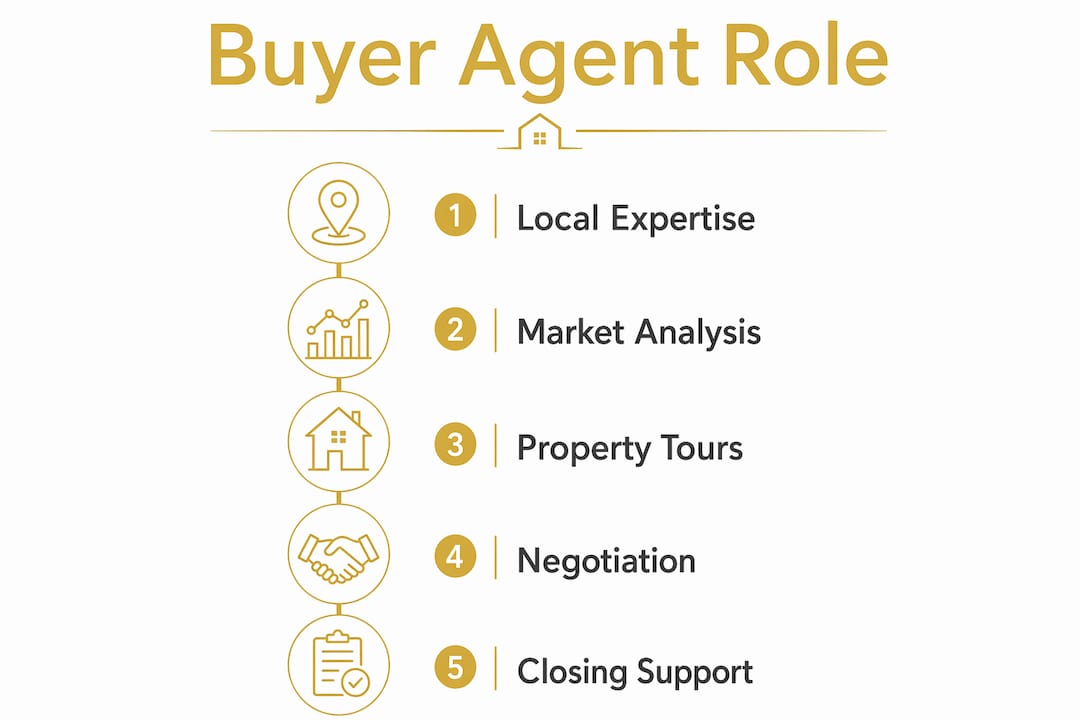
Buyer agent responsibilities in a relocation transaction cover every stage of the purchase, from the first property search to the final closing signature. The scope is wider than a standard local transaction because the buyer cannot simply drive by a home or attend every showing in person.
The core responsibilities include:
- Property search and filtering. The agent translates your criteria, budget, and lifestyle priorities into a targeted search. They filter out properties that look good online but have location or condition issues that only local knowledge reveals.
- Remote inspection coordination. When you cannot attend in person, your agent attends inspections on your behalf, reviews reports, and flags issues that affect value or safety. They often use video walkthroughs to show you conditions in real time.
- Negotiation aligned with your timeline. Relocation deals frequently involve tight move-in dates tied to job start dates or school enrollment. Your agent structures offers and contingencies to protect your schedule, not just your price.
- Closing coordination. Remote online notarization is now legally recognized in 45 states, which means buyers can sign closing documents from their current city. That legal access only works smoothly when a local agent manages the process end to end.
- Cross-agent communication. When you are also selling a home in another state, your buyer agent coordinates with your listing agent to align timelines, pricing, and contingencies. Weekly joint calls between selling and buying agents are a proven method for keeping both transactions on track.
Pro Tip: Ask your buyer agent to schedule a live video walkthrough of any property you are seriously considering. A good agent will narrate what they see, including street noise, neighbor proximity, and anything the listing photos do not show.
The buyer agent also serves as your single point of contact for lenders, title companies, inspectors, and attorneys. That coordination saves you hours and prevents the kind of miscommunication that derails deals at the last minute.

How does local market knowledge protect relocating buyers?
Local expertise is the clearest benefit of a buyer agent for anyone moving to an unfamiliar area. Online listings show you what a home looks like. A local agent tells you what it is actually worth, what the neighborhood will look like in five years, and what you are not seeing in the photos.
Annual housing-related costs vary dramatically by state, ranging from roughly $1,041 in West Virginia to nearly $9,767 in New Jersey. That gap means your budget in one state may buy a very different lifestyle in another, and a local agent recalibrates your expectations before you make an offer.
| Local knowledge area | What your buyer agent provides |
|---|---|
| Neighborhood growth trends | Identifies areas with rising demand and avoids oversupplied pockets |
| School district boundaries | Confirms exact district lines, which do not always match neighborhood names |
| Property tax rates | Compares rates across nearby zip codes to show true monthly cost |
| HOA rules and fees | Reviews governing documents for restrictions that affect your lifestyle |
| Commute and infrastructure | Assesses real drive times, planned road projects, and transit access |
Buyers relocating to North Dallas, for example, often assume that Prosper, Celina, and Frisco are interchangeable. They are not. Each city has different tax rates, school districts, and development timelines. Kamilashayehomes provides this granular comparison as a standard part of the buyer consultation, not as an add-on.
Pro Tip: Ask your agent to pull a cost-of-living comparison between your current city and your destination. Factor in property taxes, insurance, and HOA fees, not just the purchase price. The monthly payment is what you actually live with.
A local agent also identifies hidden risks that do not appear in listing descriptions. Flood zone designations, foundation repair histories, and proximity to commercial rezoning proposals are all factors that affect long-term value. You will not find these in a Zillow listing.
What challenges in the relocation buying process does a buyer agent help overcome?
The relocation buying process creates specific obstacles that do not exist in a standard local purchase. A buyer agent experienced in relocation handles these challenges systematically.
Limited viewing time. Most relocating buyers visit their destination city once or twice before making a decision. Your agent pre-screens properties so every visit counts. They eliminate homes that fail your criteria before you board a plane.
State-specific legal differences. Disclosure laws and closing customs vary widely by state. Some states require attorney involvement at closing. Others follow “buyer beware” disclosure standards that place more due diligence responsibility on the buyer. Your agent knows the local rules and prevents you from missing a required step.
Simultaneous sale and purchase timing. Selling your current home and buying a new one in a different state at the same time is the most logistically complex scenario in residential real estate. Cross-market agent referral networks connect origin and destination agents, which improves timing coordination and reduces the risk of a gap between closings.
Out-of-state financing complexity. Lenders sometimes apply stricter underwriting to buyers purchasing outside their home state. Your buyer agent connects you with lenders who regularly work with relocation buyers and understand the documentation requirements.
Rushed decisions under pressure. Buyer agents provide objective decision-making support when buyers face market pressure. A relocating buyer who has made two trips and has a job start date in six weeks is vulnerable to accepting a bad deal. Your agent’s job is to slow that pressure down and keep your financial interests front and center.
Time zone and communication gaps. When your agent is in Texas and you are still in New York or Toronto, scheduling and responsiveness matter. A relocation-experienced agent builds communication systems around your schedule, not theirs.
The families who struggle most in relocation purchases are those who try to manage these challenges without local representation. The ones who move smoothly are those who hire an agent before they start searching online.
How does a buyer agent adapt to each relocating family’s needs?
Every relocation is different. A single professional moving for a promotion has different priorities than a family of five moving for a school district. A buyer agent who specializes in relocation adjusts their approach to fit your specific situation.
Key ways buyer agents customize their support:
- School and community research. Families with children need more than school ratings. They need to know about extracurricular programs, commute distances from school to home, and neighborhood demographics. A relocation-focused agent builds this research into the property shortlist from day one.
- Virtual tour programs. For buyers who cannot visit in person, agents conduct structured video walkthroughs with commentary on condition, street context, and neighborhood feel. This goes beyond the listing agent’s marketing video.
- Investment versus owner-occupier guidance. If your relocation is temporary, your agent helps you evaluate whether buying makes financial sense versus renting. They factor in local appreciation trends, carrying costs, and resale liquidity in that specific market.
- Employer and relocation company coordination. Many corporate relocations involve a relocation management company that sets timelines and may offer financial assistance. Relocation specialists assist with logistics, community integration, and vendor coordination, and your buyer agent works within that framework to protect your interests.
- Long-term relationship building. Professionals who relocate multiple times over a career benefit from an agent who already knows their preferences. Kamilashayehomes builds client relationships designed to support repeat relocations, not just single transactions.
The Frisco TX home buying checklist from Kamilashayehomes walks families through exactly this kind of personalized preparation, covering everything from school enrollment timelines to neighborhood selection criteria.
Key Takeaways
A buyer agent in relocation is the buyer’s most effective protection against financial loss, legal errors, and rushed decisions in an unfamiliar market.
| Point | Details |
|---|---|
| Exclusive buyer representation | Your agent works only for you, not the seller, throughout the entire transaction. |
| Local market knowledge | Agents compare taxes, school districts, and growth trends that online listings never show. |
| Legal and closing navigation | State-specific disclosure laws and closing customs require local expertise to avoid costly errors. |
| Remote transaction tools | Remote online notarization in 45 states allows buyers to close without traveling back. |
| Coordinated timing | Cross-market agent networks align your sale and purchase to prevent gaps between closings. |
Why I think most relocating buyers underestimate their buyer agent
The common assumption is that a buyer agent’s job is to find you a house. That framing undersells the role by about 80%. The real value shows up in the decisions you do not make. The overpriced home in a declining pocket that looked great online. The contract clause that would have locked you into a closing date your employer’s relocation package could not support. The neighborhood that rated well on school rankings but had a commercial rezoning application pending two blocks away.
I have seen buyers arrive in a new market with a clear budget and a confident plan, only to realize three weeks in that they were evaluating properties without understanding the local pricing logic. Matching buyers with top-performing agents based on negotiation data and local knowledge is the strongest competitive advantage a relocating buyer has. That is not a marketing claim. It is the difference between a purchase that holds its value and one that creates regret within two years.
Technology has changed the process. Virtual tours, digital signatures, and remote notarization have made long-distance buying more practical than it was a decade ago. But technology does not replace judgment. It does not tell you that a particular street floods in heavy rain, or that a builder’s reputation in one subdivision is significantly weaker than in the one next door. That knowledge lives with the agent, not the app. The buyers I have seen succeed in relocation purchases are the ones who treated their buyer agent as a strategic advisor from the first conversation, not just a door opener at the end of a Zillow search.
For families moving to North Dallas, the first-time buyer mistakes guide from Kamilashayehomes covers the specific errors that out-of-area buyers make most often in Prosper, Celina, and Frisco. Read it before you start your search.
— Felix
Kamilashayehomes is built for relocating buyers
Relocating to North Dallas is a significant decision, and the right buyer agent makes the difference between a purchase you feel confident about and one you second-guess for years. Kamilashayehomes, led by Kamila Shaye, brings direct relocation experience to every transaction, with deep knowledge of Prosper, Celina, Frisco, and surrounding communities. Whether you are moving from out of state or moving from Canada to North Dallas, the team provides personalized guidance from neighborhood selection through closing. Start with a home valuation to understand what your current property is worth, or browse featured properties to see what is available in your target communities right now.
FAQ
What does a buyer agent do that a listing agent does not?
A buyer agent represents only the buyer’s interests, while a listing agent works for the seller. In a relocation purchase, that distinction protects you from accepting unfavorable terms or missing local risks the seller’s agent has no obligation to disclose.
Is a buyer agent free for relocating buyers?
In most transactions, the seller pays the buyer agent’s commission through the sale proceeds. Buyers should confirm the compensation structure with their agent before signing a buyer representation agreement, as practices vary by state.
How do buyer agents help with out-of-state closings?
Remote online notarization is legally recognized in 45 states, allowing buyers to sign closing documents digitally from their current location. Your buyer agent coordinates the title company, lender, and notary to make this process work without requiring a second trip.
What questions should I ask when choosing a relocation agent?
Ask how many relocation transactions they have closed in the past 12 months, whether they have a referral network connecting origin and destination markets, and how they handle communication across time zones. Experience with negotiating home prices in your target market is a non-negotiable qualification.
Can a buyer agent help if my employer is managing the relocation?
Yes. When a relocation management company is involved, your buyer agent works within the employer’s program while still representing your personal interests. They coordinate timelines, financial assistance details, and property criteria to make sure the transaction fits both your employer’s requirements and your family’s needs.