

Texas law is direct on this: if you’re selling a previously occupied single-family residence, you must provide a written Seller’s Disclosure Notice (TREC Form 55-1) before or on the effective date of the contract, as required by Texas Property Code §5.008. The form must reflect your honest knowledge of the property’s condition and any known material facts. Miss that deadline, and the buyer gains the right to terminate the contract for any reason within seven days of receiving it, which commonly causes delayed closings in North Dallas transactions.
Table of Contents
- What do seller disclosure requirements in Texas actually cover?
- Which transactions require the TREC form, and which are exempt?
- What happens legally if you fail to disclose?
- How to complete Form 55-1 accurately and keep records that protect you
- When should you consult a real estate attorney?
- Key Takeaways
- A listing agent’s view on disclosure in North Dallas
- Selling in North Dallas? Kamilashayehomes prepares your disclosure from day one
- FAQ
What do seller disclosure requirements in Texas actually cover?
The duty is knowledge-based. You’re not required to hire an inspector or investigate every corner of the house before signing, but you must disclose everything you actually know about the property’s physical condition and any material facts that could affect a buyer’s decision or the property’s value.
TREC Form 55-1, required for contracts entered on or after September 1, 2023, organizes those disclosures into clear categories. Here’s what sellers will encounter on the form:
| Disclosure Category | Concrete Examples to Check |
|---|---|
| Roof | Age, known leaks, prior repairs or replacements |
| Structural/Foundation | Cracks, settling, pier-and-beam repairs |
| Plumbing | Leaks, pipe material, water pressure issues |
| Electrical | Panel age, known shorts, unpermitted wiring |
| HVAC | System age, prior failures, service history |
| Pests/Wood Damage | Termite history, prior treatments, active infestations |
| Flooding/Drainage | Prior flood events, FEMA/SBA assistance received, drainage problems |
| Environmental Hazards | Asbestos, lead paint, underground storage tanks |
| Improvements and Repairs | Unpermitted additions, contractor work, permit history |
| Boundaries and Encumbrances | Easements, encroachments, deed restrictions |
| Smoke Detectors | Compliance with Texas Health and Safety Code |
| Pool/Spa Safety | Drain cover compliance, fencing requirements |
A “material defect” under Texas law is any condition that would influence a reasonable buyer’s decision to purchase or that materially impairs the property’s value or intended use. A cracked foundation qualifies. A scuff on a baseboard does not.
What you are not required to disclose:
- Defects you genuinely did not know about
- Deaths on the property unrelated to its physical condition
- Whether a previous occupant had or was suspected of having HIV or AIDS
That last carve-out is written directly into the statute, not just common practice.
Which transactions require the TREC form, and which are exempt?
The disclosure requirement applies to sellers of residential real property comprising not more than one dwelling unit that has been previously occupied. If your home fits that description, Form 55-1 is required.
Several transaction types fall outside §5.008’s coverage:
| Transaction Type | Disclosure Required? |
|---|---|
| Previously occupied single-family home | Yes |
| New construction, never previously occupied | No |
| Foreclosure sale | No |
| Transfer under court order | No |
| Trustee in bankruptcy | No |
| Mortgagee acquisition (lender-owned) | No |
| Fiduciary sale (estate, trust) | No |
| Transfer between co-owners | No |
| Transfer to spouse or close relative | No |
| Transfer to a governmental entity | No |
| Dwelling value ≤5% of total property value | No |
New construction deserves a specific note. Builders selling homes that have never been occupied are exempt from §5.008. That said, buyers of new construction have their own set of protections and disclosures to navigate. If you’re curious how those differ, the benefits of buying new construction in Texas guide covers that side of the equation.
What happens legally if you fail to disclose?
The consequences range from inconvenient to expensive. A buyer who discovers an undisclosed defect after closing has several potential remedies, and none of them are cheap for the seller.
“An ‘as-is’ clause will not shield a seller who knowingly conceals defects or makes false statements on the disclosure form.” — Rick Guerra, Texas real estate attorney
The main exposure points:
- DTPA claims: — The Texas Deceptive Trade Practices Act allows buyers to pursue treble damages in cases of knowing misrepresentation, which can multiply the financial hit significantly.
- Agent liability: Listing agents who knew about a defect and failed to disclose it face both civil exposure and TREC licensing discipline. TREC rarely awards damages directly, but civil lawsuits against agents and sellers proceed in court independently.
The “as-is” clause is the most misunderstood protection in Texas real estate. Sellers routinely believe it eliminates all post-closing liability. It does not. If you knew about a defect and stayed silent, or checked “No” on the form when the honest answer was “Yes,” the as-is language offers no cover.
Pro Tip: Document every repair you’ve made to the property. Attach receipts, contractor invoices, and permit records to your disclosure file. If a buyer later claims you concealed a defect, that paper trail is your best defense.
For sellers wondering about buyer remedies in North Dallas specifically, the first-time buyer mistakes guide explains how buyers typically discover and pursue post-closing issues.
How to complete Form 55-1 accurately and keep records that protect you
Accuracy on the form matters more than perfection. The goal is honest, complete answers based on what you actually know.
- Disclose prior flood events explicitly. The form asks specifically about flood history and any FEMA or SBA assistance received. This is one of the highest-risk disclosure areas in North Texas, where drainage and stormwater issues vary significantly by neighborhood.
For sellers handling a cash transaction, the documents needed for a cash home sale checklist is a useful companion resource for building your complete transaction file.
When should you consult a real estate attorney?
Most standard residential sales in North Dallas go through without needing an attorney beyond the title company. But certain situations genuinely warrant legal counsel before you sign or deliver a disclosure.
Get an attorney involved if:
- The property has experienced repeated or serious flooding
- You’re aware of structural failures (foundation, load-bearing walls) that were not fully repaired
- There are undisclosed encumbrances, easements, or title disputes
- Prior code violations were cited and not resolved
- The sale involves a trust, estate, or multiple co-owners with disagreements
- You received a prior demand letter or legal threat related to the property
The distinction between agent advice and attorney advice matters here. Your listing agent can help you gather records, identify gaps in the form, and coordinate with the buyer’s agent. What an agent cannot do is advise you on your legal exposure or whether a specific disclosure triggers DTPA liability. That requires a licensed Texas real estate attorney.
Rick Guerra’s analysis of Texas disclosure duties makes the point clearly: intentional nondisclosure or false statements on the form can expose sellers to fraud claims and DTPA liability regardless of what the contract says. If you have any doubt about a high-risk issue, get written legal advice and keep that advice in your transaction file. For guidance on when an attorney should be involved at closing more broadly, this overview of the real estate attorney’s role is worth reading before you decide.
Key Takeaways
Texas sellers of previously occupied single-family homes must deliver TREC Form 55-1 on or before the contract’s effective date, disclosing all known material facts, or risk giving the buyer a seven-day right to walk away.
| Point | Details |
|---|---|
| Required form | Use TREC Form 55-1 for all previously occupied single-family home sales in Texas. |
| Timing rule | Deliver the notice on or before the effective contract date to avoid the buyer’s termination right. |
| Buyer’s remedy | A late or missing notice gives the buyer seven days to terminate the contract for any reason. |
| “As-is” limits | An as-is clause does not protect sellers who knowingly conceal defects or make false statements. |
| Kamilashayehomes | Works with North Dallas sellers to prepare accurate disclosures and reduce closing risk in Prosper, Frisco, and Celina transactions. |
A listing agent’s view on disclosure in North Dallas
The sellers who run into trouble at closing are rarely the ones who hid something deliberately. More often, they simply didn’t know what to look for, or they filled out the form in a hurry the day the offer came in.
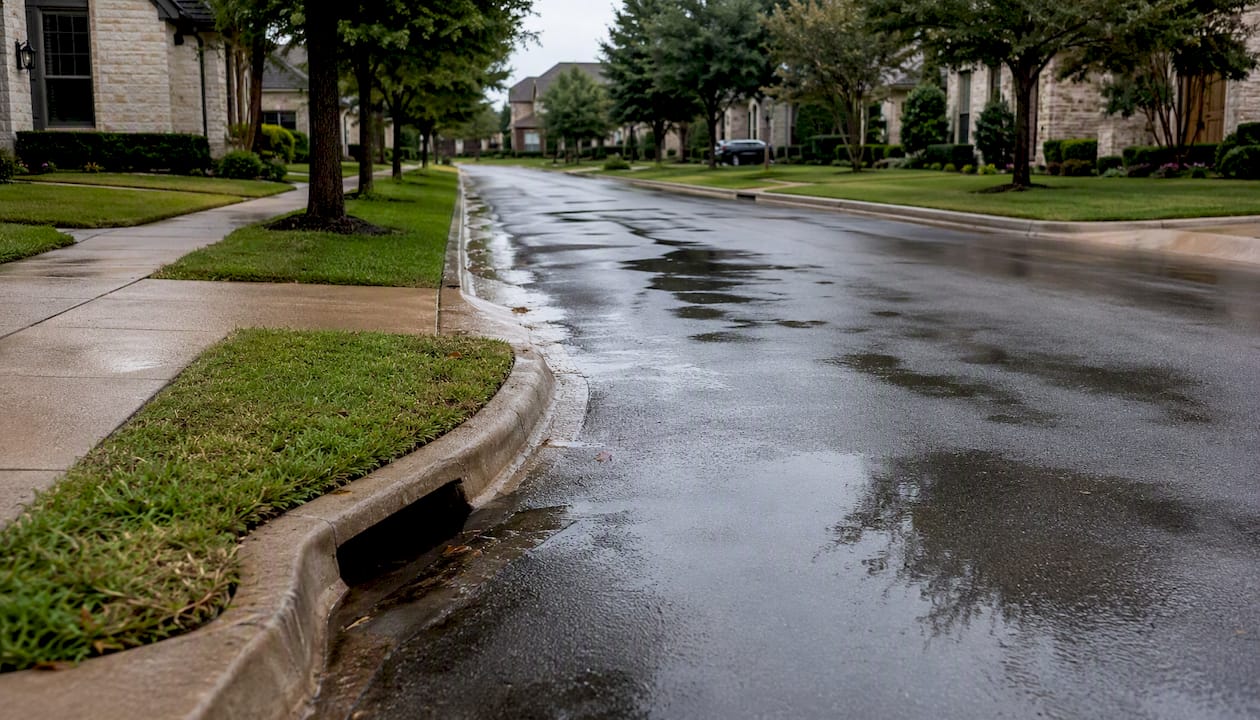
In Prosper, Frisco, and Celina, a few issues come up repeatedly. Drainage and stormwater management vary block by block in newer master-planned communities, and a property that has never technically flooded may still have a drainage history worth disclosing. Sellers in these neighborhoods should pull their HOA records and check whether any drainage-related notices were issued, even if the home itself was unaffected.
New-construction sellers sometimes assume they’re exempt from disclosure entirely. That’s true if the home has never been occupied, but the moment a builder or investor has lived in or rented the property, the exemption disappears and Form 55-1 is required.
What a good listing agent actually does on the disclosure front is underappreciated. Gathering the records, flagging the questions that need more than a checkbox, coordinating with the buyer’s agent to prevent misunderstandings, and making sure the form is delivered with a timestamp before the contract goes binding: that’s the work that keeps closings on track. The disclosure isn’t just a legal formality. It’s the document a buyer’s attorney will read first if something goes wrong after closing.
Selling in North Dallas? Kamilashayehomes prepares your disclosure from day one
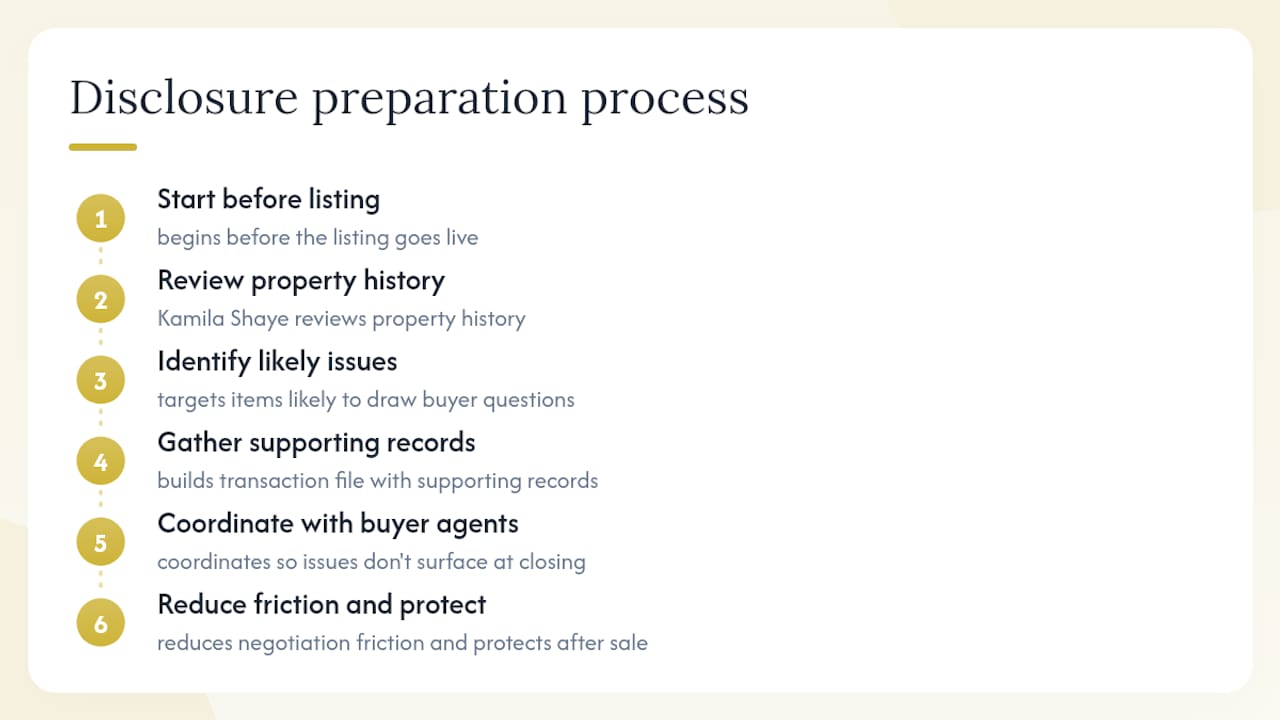
Getting the Seller’s Disclosure Notice right is one of the highest-leverage things you can do before listing. Kamilashayehomes works with sellers in Prosper, Celina, Frisco, Southlake, McKinney, and Allen to prepare accurate disclosures from the start, gather supporting records, and coordinate with buyer agents so nothing surfaces at closing that should have been addressed upfront.
The process starts before the listing goes live. Kamila Shaye reviews your property history, identifies the disclosure items most likely to draw buyer questions in your specific neighborhood, and helps you build a transaction file that holds up. That preparation reduces negotiation friction and protects you after the sale.
If you’re getting ready to list, start with a home valuation to understand where your property stands, then reach out to discuss your disclosure situation before you sign anything.
Authoritative sources and where to find the official TREC form
- Seller’s Disclosure Notice | TREC
- Texas Constitution and Statutes
- tex._prop._code_section_5.008
- Texas Property Code – PROP § 5.008 | FindLaw
- Texas Property Code Section 5.008 (2025) – Seller’s Disclosure of Property Condition :: Justia
- Seller disclosure duties in Texas real estate transactions — Rick Guerra
- Texas Real Estate Research Center — show-and-tell
Save a copy of the completed Form 55-1 and the relevant §5.008 statute text in your transaction folder alongside your repair records and inspection reports.
This article provides general information about Texas real estate disclosure law and is not legal advice. Confirm current requirements with the Texas Real Estate Commission or a licensed Texas real estate attorney before completing your transaction.
FAQ
Does Texas require a seller disclosure statement?
Yes. Texas Property Code §5.008 requires sellers of previously occupied single-family residences to provide a written Seller’s Disclosure Notice (TREC Form 55-1) on or before the effective date of the contract.
What does Section 5.008 of the Texas Property Code require sellers to disclose?
Sellers must disclose known material facts and the physical condition of the property, covering systems such as roof, foundation, plumbing, electrical, HVAC, pests, flooding history, and environmental hazards, using the Yes/No/Unknown format on Form 55-1.
What are most seller property disclosures required for?
The disclosure requirement applies to previously occupied single-family residences. New construction never previously occupied, foreclosure sales, fiduciary transfers, and several other transaction types are exempt under §5.008.
What are the legal consequences of failing to disclose in Texas?
A buyer who discovers an undisclosed known defect may pursue rescission, monetary damages, or claims under the Texas Deceptive Trade Practices Act. An as-is clause does not protect sellers who knowingly concealed defects or made false statements on the form.