

North Dallas commute patterns are defined by two primary highway corridors, a regional rail network, and traffic events that shift travel times by 15–20 minutes on any given day. The Dallas North Tollway (DNT) and US-75 carry the bulk of daily traffic from suburbs like Prosper, Celina, and Frisco into downtown Dallas. DART’s 93-mile light rail system adds a transit layer that works best as a hybrid option. Understanding how these systems interact gives you a real advantage when choosing where to live and how to plan your daily travel.
What are the main North Dallas commute routes and travel times?
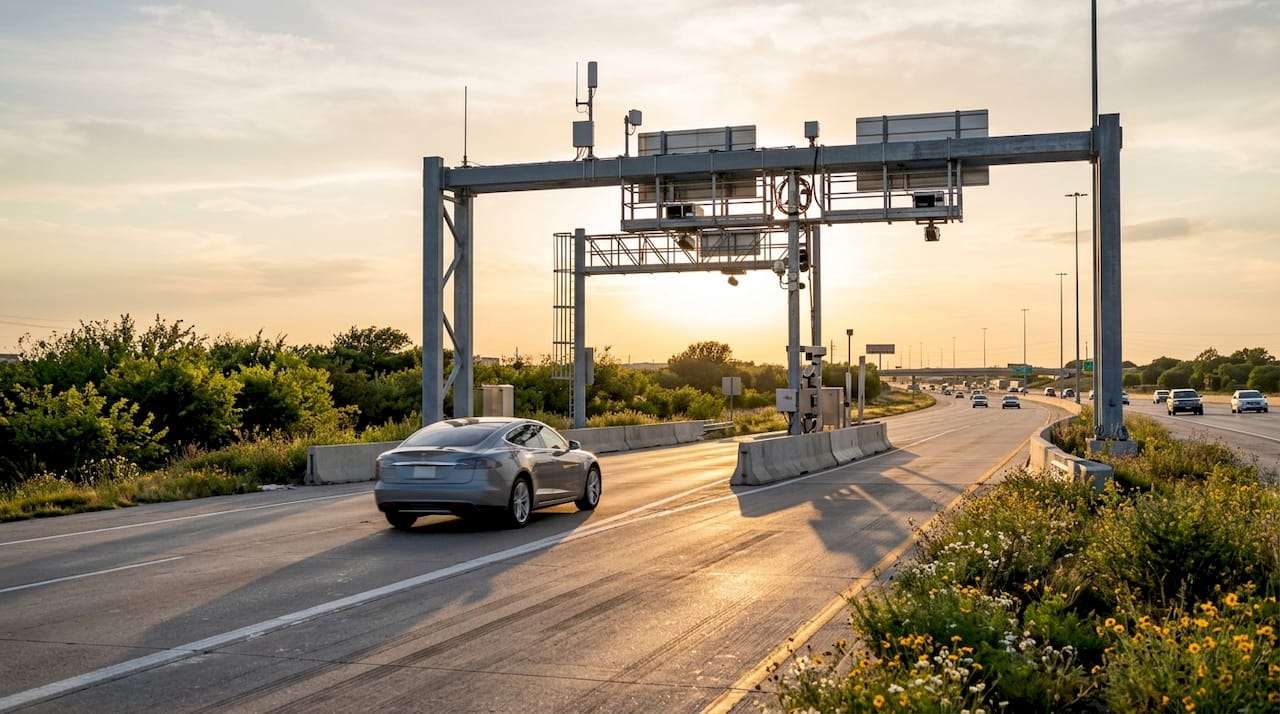
The Dallas North Tollway and US-75 are the two corridors that define commuting in North Dallas. Off-peak drives from suburbs like The Colony, Celina, and Anna typically run 30–50 minutes to downtown. Rush hour adds roughly 15–20 minutes to that baseline, with southbound morning traffic and northbound evening traffic taking the hardest hits.
The DNT generally moves faster than US-75 during peak hours. US-75 carries heavier congestion through Richardson and Plano, where on-ramp stacking and lane weaving slow traffic significantly. Commuters who drive US-75 daily often find the DNT worth the toll cost during the 7:00–9:00 AM and 4:30–6:30 PM windows.
Toll lanes on both corridors offer a reliability advantage. TEXpress managed lanes have served 42 million vehicles since 2014, with 81% driver satisfaction reported in 2026. That figure reflects what frequent commuters already know: paying for a managed lane buys predictability, not just speed.
Here is a quick reference for typical drive times from key northern suburbs:
| Suburb | Off-peak drive to downtown | Peak-hour drive to downtown |
|---|---|---|
| Frisco | 35–45 minutes | 50–65 minutes |
| Celina | 45–55 minutes | 60–75 minutes |
| The Colony | 30–40 minutes | 45–60 minutes |
| Anna | 50–60 minutes | 70–85 minutes |
- DNT: Faster and more consistent during peak hours; toll costs apply
- US-75: Free lanes available but congestion through Plano and Richardson is significant
- Managed lanes: Available on both corridors; best used during peak windows
Pro Tip: If you commute downtown five days a week, calculate your monthly toll cost against the time saved. For most Frisco and Celina residents, the DNT toll lanes pay for themselves in reduced stress and predictable arrival times.
How does public transit shape commuting options in North Dallas?
DART serves 12 member cities including Dallas, Plano, Richardson, and Irving, operating a 93-mile light rail network and more than 100 bus routes. The system transports over 170,000 daily passengers across a 700-square-mile service area. That scale makes DART one of the largest light rail networks in the United States.
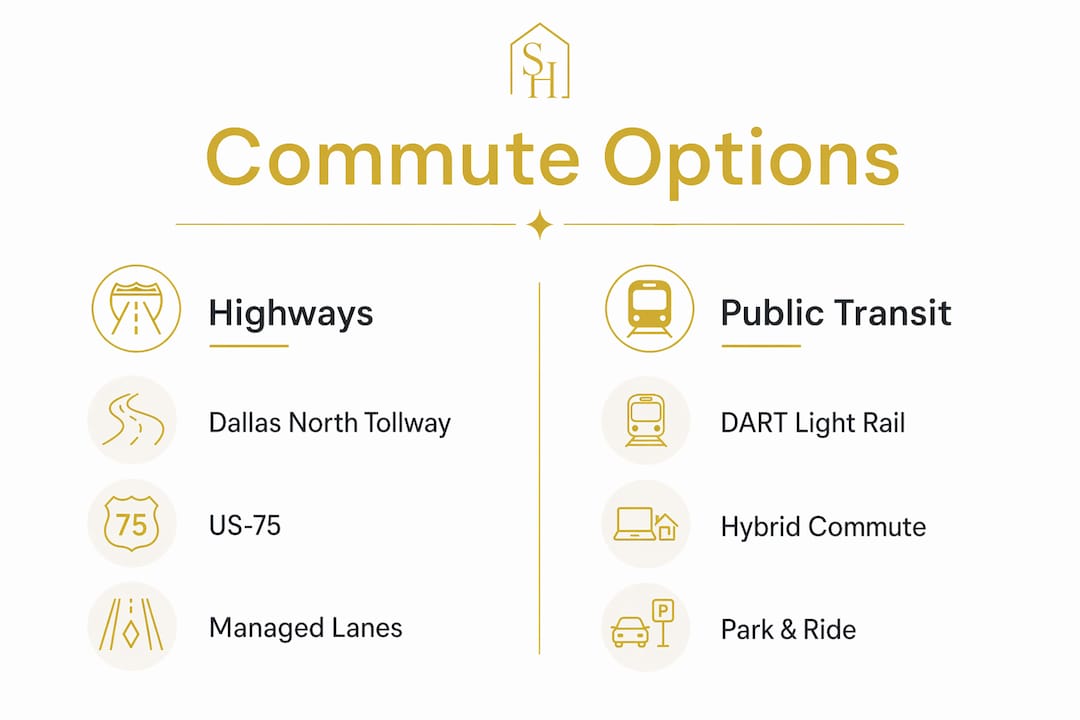
For North Dallas residents, the most practical transit entry point is Parker Road Station in Plano. Parker Road Station is the northernmost DART stop and offers 2,078 free parking spaces. Parking permits are available from 6:00 AM to 6:00 PM on weekdays and 9:00 AM to 3:00 PM on weekends, making it accessible for a range of schedules.
The hybrid commute model works like this:
- Drive from your suburb to Parker Road Station during off-peak hours, avoiding the worst of downtown-bound highway traffic.
- Park for free and board the Red or Orange Line toward downtown Dallas.
- Exit at a station close to your workplace, eliminating the need to park downtown.
- Return the same way in the evening, picking up your car before the permit window closes.
This approach solves the first and last-mile problem that makes pure transit impractical for most North Dallas residents. DART’s network is built around station access, so transit efficiency depends heavily on how close your home and workplace are to rail stops. Multiple transfers reduce the time advantage significantly.
Pro Tip: Buy a DART monthly pass if you use the hybrid commute three or more days per week. The per-ride cost adds up fast, and a monthly pass also covers bus connections within the service area.
How do traffic events and infrastructure work impact North Dallas commuting?
Major events and planned maintenance create traffic conditions that map apps often underestimate. The North Central Texas Council of Governments (NCTCOG) actively promotes travel strategies for large events, recommending carpooling, alternate routes, and flexible work arrangements. The FIFA World Cup 2026 matches scheduled in the Dallas area represent the clearest example of event-driven congestion affecting the entire North Dallas corridor.
Infrastructure maintenance adds a separate layer of disruption. A May 2026 bridge repair near Lemmon Avenue on the Dallas North Tollway reduced traffic to a single lane in each direction from Friday evening through Monday morning. That kind of closure turns a 40-minute drive into a 75-minute crawl, even on a Saturday.
Weekend traffic on the DNT is not automatically lighter. Lane closures for bridge work and maintenance can create bottlenecks that rival weekday rush hour, catching commuters off guard who assume weekends are always clear.
Key factors that create unexpected delays:
- Planned lane closures: NTTA maintenance windows often run Friday evening through Monday morning on the DNT
- Event-day surges: FIFA World Cup 2026 match days will spike traffic near AT&T Stadium and ripple outward across regional highways
- Weekend assumptions: Weekend bottlenecks from infrastructure work challenge the common belief that Saturday and Sunday drives are always faster
- Regional ripple effects: NCTCOG data shows event traffic impacts extend well beyond the immediate venue area
Checking NCTCOG travel advisories before any weekend trip on the DNT takes less than two minutes and can save you 30 minutes of unexpected sitting.
What strategies can commuters use to get the most out of North Dallas travel?
Adjusting your schedule is the single most effective tool available. The 15–20 minute rush-hour penalty on both the DNT and US-75 disappears almost entirely if you shift your departure by 30–45 minutes. Leaving before 7:00 AM or after 9:00 AM southbound, and before 4:00 PM or after 6:30 PM northbound, puts you in a fundamentally different traffic environment.
Here is a practical framework for planning your North Dallas work commute:
- Map your corridor first. If your workplace sits near a DART rail station, the hybrid commute via Parker Road Station likely beats driving the full distance. If your office is suburban, the DNT or US-75 with managed lanes is your primary tool.
- Check NCTCOG advisories weekly. Event schedules and maintenance windows are published in advance. Knowing about a Friday night lane closure on the DNT lets you reroute or adjust your departure time before you are already stuck.
- Use TEXpress managed lanes during peak hours. The reliability advantage is real. Managed lanes maintain consistent speeds when general lanes are stop-and-go.
- Plan event-day travel separately. On FIFA World Cup 2026 match days, NCTCOG recommends carpooling and flexible work start times. Treat match days like major snowstorms: plan around them, not through them.
- Secure your transit permits early. Parker Road Station parking permits for weekday use are available but fill up. Applying before you need them gives you a reliable fallback on high-congestion days.
Pro Tip: If your employer offers flexible start times, even a 30-minute shift in your schedule can cut your annual commute time by dozens of hours. Frame it as a productivity gain, not a lifestyle preference, and most managers respond well.
Understanding North Dallas growth trends also helps here. As Prosper, Celina, and Frisco continue to grow, traffic volumes on both the DNT and US-75 will increase. Building good commute habits now pays dividends as the region expands.
Key Takeaways
North Dallas commuting is defined by two highway corridors, a hybrid transit option at Parker Road Station, and event-driven disruptions that require active planning rather than routine assumptions.
| Point | Details |
|---|---|
| Primary corridors | The DNT and US-75 carry most traffic; DNT is faster and more consistent during peak hours. |
| Rush-hour penalty | Peak travel adds 15–20 minutes each way; shifting departure by 30–45 minutes eliminates most of this. |
| Hybrid transit option | Driving to Parker Road Station and taking DART rail downtown solves the first/last-mile problem for many commuters. |
| Event and maintenance disruptions | Lane closures and events like FIFA World Cup 2026 create delays on weekends as well as weekdays. |
| Managed lane value | TEXpress lanes offer predictable travel times and carry 81% driver satisfaction, making them worth the toll cost during peak windows. |
What relocating residents often miss about North Dallas traffic
Most people moving to North Dallas check Google Maps once, see a 40-minute drive time, and call it good. That number is real, but only for about four hours of the day. What the map does not show you is how differently the DNT and US-75 behave from each other during the same rush hour, or how a Friday night bridge closure can turn your Saturday morning errand run into a 90-minute ordeal.
The hybrid commute via Parker Road Station is genuinely underused. Residents who live in Plano or Allen and work near a downtown DART station often find it faster and cheaper than driving the full distance, once they factor in downtown parking costs. The catch is that it only works well when both ends of your trip are near stations. If your office is in a suburban campus park, DART gets you close but not there.
What I find most overlooked is the event calendar. The FIFA World Cup 2026 is the obvious example, but the pattern repeats with concerts at American Airlines Center, Cowboys games, and State Fair traffic in the fall. These are not surprises. They are published months in advance. Commuters who treat the event calendar as a traffic planning tool rather than entertainment news consistently have shorter, less stressful commutes.
Weekend traffic assumptions are the other blind spot. New residents often assume that Saturday and Sunday drives are always easy. A single lane closure on the DNT near Uptown can back traffic up for miles on a Saturday morning. Check the NTTA and NCTCOG sites before any weekend trip on the tollway, especially from friday evening through Sunday.
If you are relocating and want to understand how commute times affect home values in specific neighborhoods, that context matters more than most buyers realize when choosing between Prosper, Celina, or Frisco.
— Felix
How Kamilashayehomes helps you find the right fit in North Dallas
Kamilashayehomes specializes in Prosper, Celina, Frisco, and surrounding communities, with local knowledge that goes well beyond listing prices. Kamila Shaye understands how commute patterns, school zones, and neighborhood growth trajectories interact to shape long-term value. Whether you are relocating from out of state or moving within the region, that local context changes which properties make sense for your life. Browse featured properties in North Dallas to see current listings in commute-friendly locations, or get a free home valuation to understand what your current home is worth before you make a move.
FAQ
What are the main commute routes in North Dallas?
The Dallas North Tollway and US-75 are the two primary corridors. The DNT is generally faster during peak hours, while US-75 offers free lanes but carries heavier congestion through Plano and Richardson.
How long does a typical North Dallas commute take?
Off-peak drives from suburbs like Frisco, Celina, and The Colony run 30–50 minutes to downtown Dallas. Rush hour adds roughly 15–20 minutes to that baseline in each direction.
Is DART a practical option for North Dallas commuters?
DART works best as a hybrid commute. Driving to Parker Road Station and taking the Red or Orange Line downtown avoids highway congestion and eliminates downtown parking costs, but works only when your workplace is near a rail station.
How do events like the FIFA World Cup 2026 affect North Dallas traffic?
NCTCOG advises that major events create regional congestion well beyond the immediate venue. On match days, carpooling, alternate routes, and flexible work schedules are the most effective ways to maintain reliable travel times.
Are weekends reliably less congested on the Dallas North Tollway?
Not always. Planned maintenance and bridge repair work, such as the May 2026 Lemmon Avenue closure, can reduce the DNT to a single lane from Friday evening through Monday morning, creating delays that rival weekday rush hour.